

Predictable B2B Revenue: Patterns from $480M+ in Capital Raised
June 30, 2026
Highlights
- Beyond the Founder’s Network: The first million in revenue often comes from a founder’s personal connections. The real test of a company is building systems that scale sales beyond the founder alone.
- Asking for Advice, Not Making a Sale: Early-stage outreach performs better when framed as a request for expertise rather than a pitch, building affinity and lowering buyer defenses.
- Identifying the Internal Change Agent: Enterprise deals move faster when founders locate the entrepreneurial “influencer” inside a buying organization who can champion the deal internally.
- Reading Green Flags on Sales Calls: Body language, proactive follow-up questions, and a buyer-driven next step are the clearest live signals that a deal is progressing.
- Testing Willingness to Pay Without Guessing: Early customers can be engaged through third-party-style research interviews and A/B-tested messaging rather than direct, premature pricing pitches.
Summary
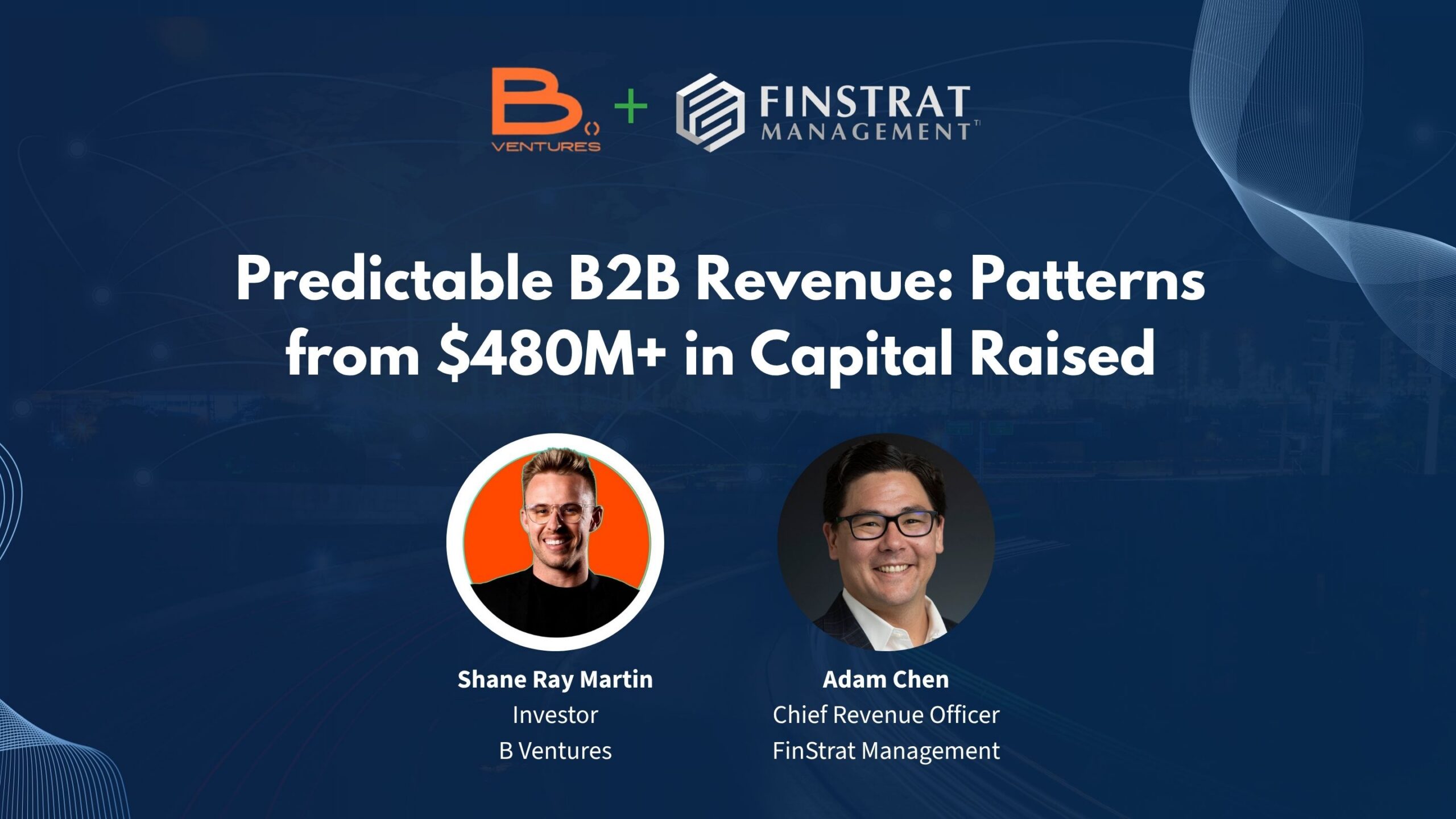
Shane Ray Martin sits down with Adam Chen, who leads the revenue team at FinStrat Management, a firm that has helped more than 300 founders raise over $480 million in venture capital. The discussion centers on the patterns separating founders who build predictable, scalable B2B revenue from those who stay dependent on personal hustle and individual relationships.
A recurring theme is the shift from founder-led, network-driven sales to systemized, repeatable revenue generation. Chen emphasizes that most early traction comes from a founder’s own connections, but real growth requires building structured outbound processes, validating messaging continuously, and treating consistency, not motivation, as the core driver of results.
The conversation also explores the psychology of B2B selling: leading with curiosity instead of a pitch, asking direct (sometimes uncomfortable) questions about budget and decision-making authority, and mapping the internal “change agents” or influencers who can move a deal forward from within an organization. Chen stresses that buyers don’t want to be sold to. They want a partner who listens, validates their pain points, and co-solves problems with them.
Later in the discussion, the group works through live, real-world scenarios, from diplomatic and government sales cycles to early-stage pricing strategy for an AI-enabled advisory platform, applying the same underlying principles: gather information before pitching, find believers and influencers, protect trust with design partners, and use indirect research methods to validate pricing before committing to a model.
Key Takeaways
- Systemize Beyond the Founder: Scaling past the first $1M requires building repeatable channels and processes that don’t depend solely on the founder’s personal network.
- Lead With Curiosity, Not a Pitch: Asking for advice and feedback, rather than selling, builds trust faster and surfaces real buying signals.
- Find and Empower the Internal Champion: Identifying the “change agent” or influencer inside a buyer’s organization multiplies a founder’s reach and credibility without added headcount.
- Consistency Over Motivation: Daily outbound activity and a willingness to take uncomfortable, direct actions, like cold outreach and hard questions, compound into long-term results more than short-term enthusiasm.
- Validate Pricing Indirectly: Use third-party-style research interviews, A/B testing, and hypothetical value-based questions to test willingness to pay without burning trust with early design partners.
- Discovery Before Solution: The strongest sales calls prioritize listening and validating understanding over pitching. Closing should feel like a natural extension of a well-understood problem, not a hard sell.
Conclusion
Building predictable B2B revenue isn’t about working harder or pushing a harder pitch. It’s about disciplined systems, sharper questions, and treating early customers as partners rather than transactions. These are the same principles FinStrat Management applies every day when helping founders get investor-ready and scale their go-to-market motion. If your team is working through similar challenges, from closing your first enterprise deals to validating pricing with design partners, FinStrat’s founder services can help you build the systems Adam describes here.