

The Future of Venture: Massive VC’s Vision for Longevity and Impact
December 9, 2025 | 39 MIN
Highlights
- Massive VC targets deep tech sectors like space, energy, quantum, and cybersecurity, focusing on early commercial inflection points.
- The firm began investing via SPVs to maintain flexibility and quickly adapt in a competitive venture market.
- Massive uses a tailored rubric to evaluate deep tech startups, focusing on commercial traction and risk mitigation rather than traditional SaaS metrics.
- Strong founder partnership and empathy, rooted in Ari’s and David’s operator backgrounds, are key to Massive’s investment approach.
- Corporate venture capital plays an important but nuanced role in deep tech, requiring careful navigation of partnership terms.
- Investment decisions are made through a high-conviction committee approach emphasizing tension and debate rather than forced consensus.
- Ari envisions Massive as a long-term institution that can evolve beyond its founders while maintaining its deep tech thesis and values.
Summary
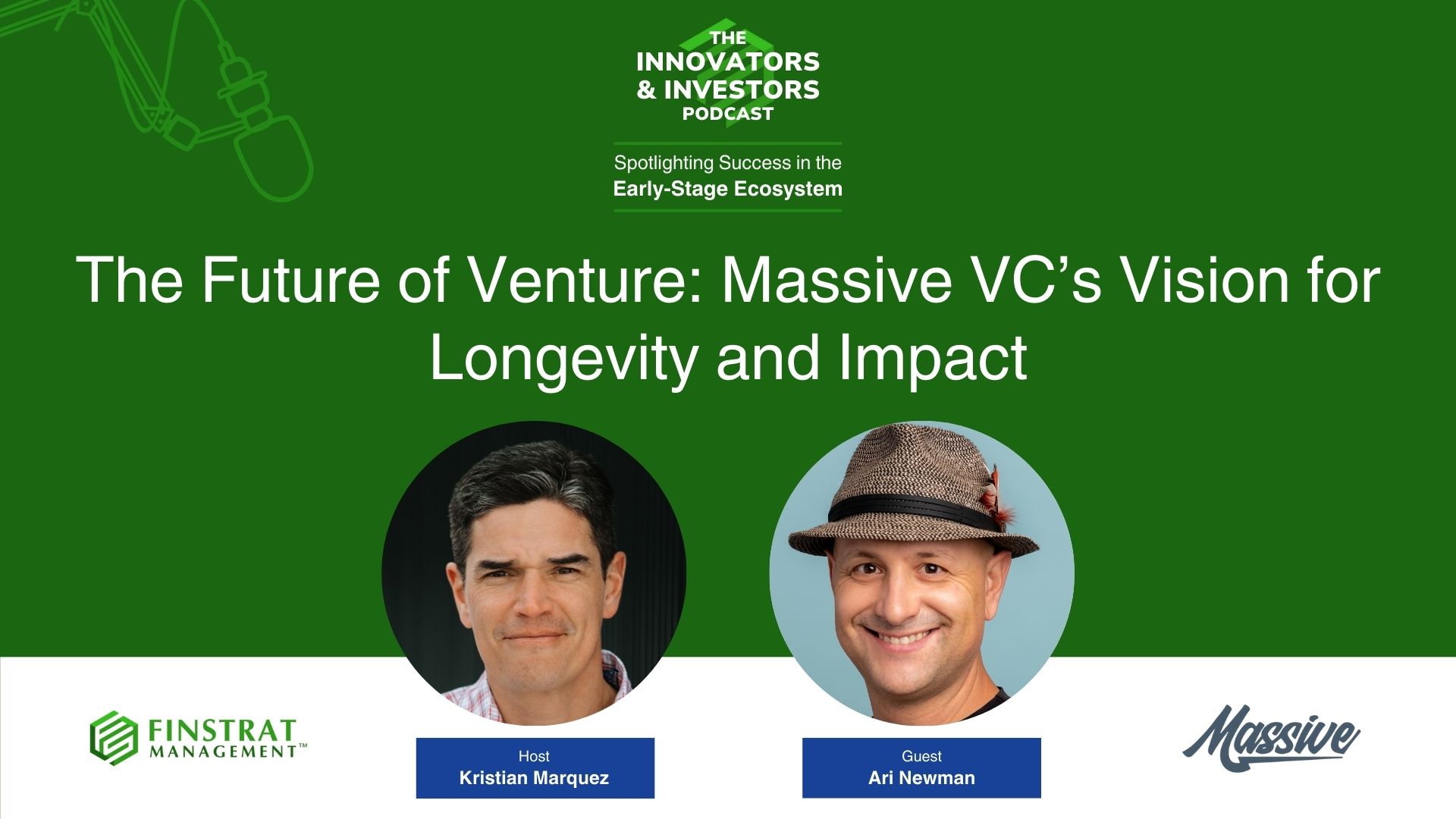
In this episode of The Innovators and Investors Podcast, Kristian Marquez interviews Ari Newman, co-founder and managing director of Massive VC, a Boulder-based venture capital firm specializing in deep tech investments. Massive VC, founded in 2020, focuses on investing at early commercial inflection points primarily between seed and Series B rounds, targeting sectors they deem “inevitable” for humanity’s future: the new space economy, energy transformation, data connectivity, and cybersecurity, including quantum technology and hyperscale data analytics. Ari shares insights about the firm’s unconventional start—initially investing through special purpose vehicles (SPVs) rather than a traditional fund—to remain flexible and opportunistic in a crowded venture landscape.
Ari and his co-founder, David Mandel, emphasize the importance of investing when startups have mitigated key risks (team, product, market, regulatory) and reached commercial traction, which reduces capital consumption in early experimental stages. Their portfolio strategy leans toward a concentrated set of about 20 companies with a heavy reserve allocation to support follow-on rounds. Ari also discusses the role and dynamics of corporate venture capital in deep tech, noting the value of partnerships but warning founders to proceed cautiously due to potential restrictive terms.
Ari’s extensive experience as a founder and investor shapes Massive’s founder-centric approach. The firm prioritizes partnering with teams that are deeply committed, resilient, and focused on solving real problems rather than founders motivated merely by the allure of startup culture. Investment decisions are made through a collaborative yet high-conviction process that respects dissenting opinions to avoid mediocrity.
Looking forward, Ari envisions Massive as a lasting institution beyond the current leadership, built on a strong thesis and authentic relationships. Reflecting on his career, Ari credits key mentors and partnerships—especially early trusted co-founders—as foundational to his success and leadership philosophy. He encourages founders and investors alike to engage with Massive for opportunities in transformative, frontier technologies.
Key Insights
- Deep Tech Investment Requires Different Metrics and Patience: Unlike SaaS or fintech, deep tech startups, especially in quantum or space, have extended timelines and complex risk vectors. Massive’s rubric accounts for product development stages, customer engagements, and team stability, highlighting the need for customized evaluation frameworks in frontier technologies. This underscores that traditional VC heuristics like the “rule of 40” are insufficient for these domains.
- SPVs as an Agile Investment Vehicle: Massive’s initial use of SPVs allowed them to avoid the lengthy process of raising a traditional fund, enabling faster deployment and learning. This approach provided flexibility in deal sizing, ownership targets, and timing, critical in a rapidly evolving market. However, Ari notes the limitations of SPVs when dealing with institutional LPs, suggesting that SPVs work best as a strategic option rather than a full replacement for a pooled fund.
- Operator Experience Enhances Value-Add: Ari and David’s combined five startup exits and operational roles give them credibility and empathy when working with founders. Their experience allows them to provide meaningful guidance, help avoid common pitfalls, and build trusted partnerships. This operational background differentiates Massive from purely financial investors and fosters deeper founder relationships.
- Founder Profile and Commitment Matter: Massive invests in founders with authentic commitment to solving hard problems rather than those attracted to the startup lifestyle or chasing trends. Ari highlights the dangers of founders who “thrash” due to lack of conviction or readiness to lead a venture-backed company, emphasizing the importance of grit and customer focus in early-stage deep tech.
- Corporate Venture Capital is a Double-Edged Sword: While corporates bring valuable capital, networks, and go-to-market acceleration, their involvement can introduce restrictive terms like right of first refusal, which may hamper startups. Ari stresses that founders should approach corporate capital with eyes wide open and value partnerships where institutional VCs and corporates align to provide continuity and strategic support.
- Investment Committee Dynamics Foster Better Decisions: Massive’s approach to investment decisions balances high conviction with intellectual rigor and respect for dissent. Avoiding forced consensus helps prevent mediocrity and allows the firm to back contrarian or complex bets in deep tech. This dynamic is critical in a field where many opportunities fall outside mainstream understanding.
- Long-Term Vision and Legacy: Ari views Massive as an enduring platform beyond its founders, built on a clear thesis around “inevitable” deep tech markets. While currently focused on fundraise and execution, the firm plans to evolve and sustain itself over decades, embodying the same long-term thinking they expect from their portfolio companies. This perspective aligns with the patient capital mindset required for deep tech investing.
Additional Context
Ari’s reflections on his career also emphasize the value of trusted partnerships, mentorship, and continuous learning. His formative experiences, including his first startup in 1999 and working with leaders like Simon Kaloff and Brad Feld, shaped his leadership style centered on trust, support, and shared vision. This personal narrative underlines how interpersonal dynamics are as crucial in venture capital as financial acumen, especially when backing complex technical ventures with long horizons.
Massive VC’s story also illustrates the evolving nature of venture capital and the importance of tailoring strategies to founder and market needs. Their iterative approach to fund structure, LP engagement, and portfolio construction showcases a pragmatic and adaptive mindset increasingly necessary in today’s dynamic innovation ecosystem.
Overall, the episode offers valuable lessons for founders, investors, and LPs interested in deep tech and frontier sectors, highlighting the importance of timing, conviction, partnership, and long-term commitment in driving transformative innovation.
Stay up-to-date with Ari Newman and his work with Massive VC.

Follow our show on your podcast channel of choice or listen below.