

Unlocking Brain Potential Through AI and Neuroscience
September 10, 2025 | 40 MIN
Highlights
- i-BrainTech uses AI and neuroscience to augment natural brain intelligence for improved motor control and decision-making.
- The technology involves a brain sensory cap that allows users to control an avatar through thought visualization and real-time brain activity feedback.
- The initial focus is on elite sports, where mental performance is crucial, with applications expanding to rehabilitation and broader brain health.
- Market education and timing are critical in deep tech entrepreneurship to gain adoption and validate value propositions.
- Visualization activates brain regions similarly to physical movement, aiding skill acquisition and muscle memory without physical strain.
- Ethical considerations prevent invasive brain writing; focus remains on safe, natural brain performance enhancement.
- Partnerships with top sports organizations help scale impact and democratize brain training technologies globally.
Summary
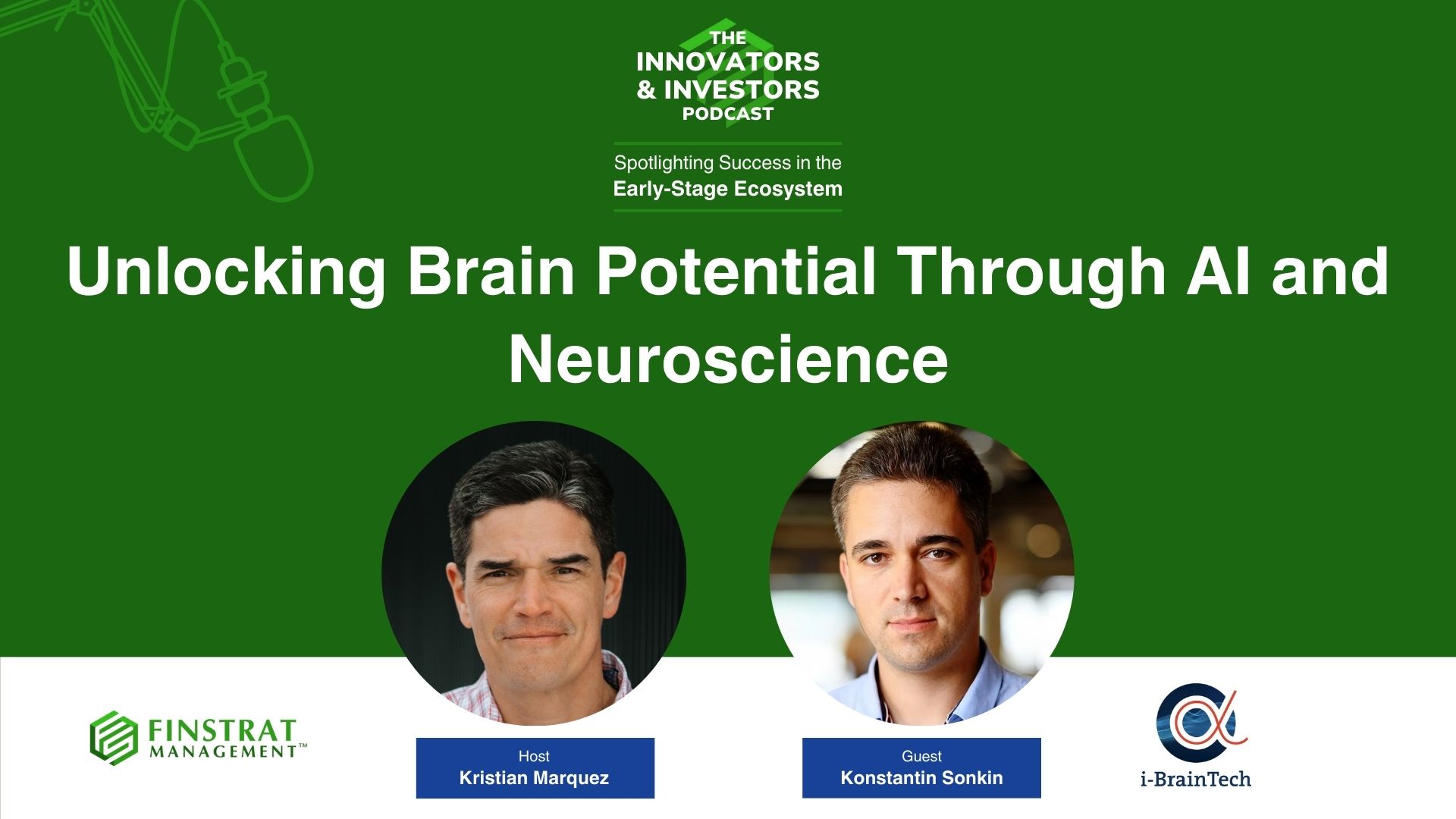
In this insightful episode of The Innovators and Investors Podcast, Kristian Marquez interviews Konstantin Sonkin, the CEO of i-BrainTech, a deep tech company dedicated to enhancing brain performance using AI technologies. Konstantin, a neuroscientist with a PhD in computational neuroscience and an MBA in global entrepreneurship, shares his journey of merging scientific research with entrepreneurship to address real-world needs, specifically in elite sports and brain health.
i-BrainTech’s core mission is to augment natural intelligence by creating AI-driven brain training technologies that improve decision-making and motor control. The company’s flagship product uses a brain sensory cap with strategically placed sensors to allow users to control a digital avatar through thought visualization, providing real-time feedback on brain activity. This innovative approach transforms brain training into an interactive experience, akin to a “brain gym,” accelerating skill acquisition without physical strain or injury risk.
Konstantin explains that visualization activates the brain in a manner similar to actual physical movement, enabling muscle memory development and neuromuscular pathway strengthening, which is particularly beneficial for athletes recovering from injuries. The technology has been validated in professional sports, including collaborations with top clubs like Juventus, helping to democratize brain training from elite athletes to wider populations, including children and individuals with disabilities.
Throughout the discussion, Konstantin emphasizes the importance of market education, focus, and timing in deep tech entrepreneurship. He highlights the challenges of moving innovations from academic research into practical, scalable solutions, stressing the need for clear communication, targeting early adopters, and cultivating strong, authentic teams. He also reflects on the ethical boundaries of brain-computer interfaces, cautioning against invasive technologies that write directly to the brain, while advocating for natural intelligence enhancement through non-invasive means.
The conversation wraps up with Konstantin’s reflections on leadership, the value of enjoying the entrepreneurial journey, and the critical role of integrity and passion in building a successful company. He invites like-minded innovators to connect and collaborate on advancing AI for brain performance.
Key Insights
- Integration of Science and Entrepreneurship: Konstantin’s dual background in neuroscience and business exemplifies the importance of bridging academic research and market needs. His approach highlights how scientific innovation must be coupled with practical execution and market education to create impactful technologies. Deep tech ventures require leaders who can navigate both domains effectively.
- Focus and Niche Targeting: The decision to initially target elite sports underscores a strategic focus on a market segment with clear needs, financial resources, and sophisticated stakeholders. Sports provide a natural proving ground for brain enhancement technologies due to the high mental demands and competitive nature. This focus allows i-BrainTech to build credibility and validation before expanding into healthcare and consumer markets.
- Brain Training as a Routine Exercise: By positioning brain training as analogous to physical exercise, i-BrainTech taps into a familiar concept that can facilitate user adoption. The real-time feedback mechanism fosters engagement and measurable progress, which are essential for sustained use and effectiveness. This model may help overcome skepticism often associated with brain-related technologies.
- Visualization and Neuroscience Application: Utilizing visualization to activate motor planning areas without actual movement is a scientifically grounded method to facilitate learning and rehabilitation. This approach reduces injury risk, accelerates skill development, and aids recovery in immobilized patients, demonstrating the technology’s versatility beyond sports performance enhancement.
- Market Education and Adoption Challenges: Konstantin’s experience reveals how deep tech startups must often educate their markets extensively because their solutions are ahead of current understanding. Success depends on identifying and engaging early adopters—innovators and champions—who can validate and advocate for the technology, rather than spending effort on skeptics or laggards. This strategic communication is critical for gaining traction.
- Ethical Boundaries in Brain-Computer Interfaces: Konstantin stresses caution against invasive brain technologies that write directly to memory or neural pathways, highlighting the current scientific limitations and ethical concerns. This stance reflects a responsible innovation mindset, prioritizing natural intelligence enhancement and brain health over unproven or potentially harmful interventions.
- Leadership and Team Building: The emphasis on authenticity, honesty, and passion in leadership and team dynamics is a key factor in i-BrainTech’s growth. Hiring people who share the vision and bring dedication beyond financial incentive fosters a loyal, motivated team capable of tackling the complexities of deep tech innovation and market challenges.
- Leveraging Sports Brands for Mass Impact: Collaborations with renowned sports organizations like Juventus enable i-BrainTech to reach extensive audiences, demonstrating how strategic partnerships can amplify a startup’s visibility and adoption. Using the appeal of top athletes and clubs to introduce brain training to fans and aspiring athletes is a powerful growth lever.
- Future Vision for Brain Performance Enhancement: While current capabilities focus on non-invasive brain training, Konstantin acknowledges the potential for future technologies to further unlock human cognitive and motor performance. However, he advocates for a cautious, measured approach that respects ethical constraints and prioritizes natural development pathways, ensuring responsible progress in the field.
- Entrepreneurial Journey and Personal Growth: Konstantin’s reflections on embracing the journey, learning from diverse experiences, and balancing scientific rigor with communication and leadership provide valuable lessons for entrepreneurs. The process of bringing deep tech innovations to market is demanding but rewarding, requiring resilience, adaptability, and a passion for impact.
Conclusion
This episode offers a comprehensive look into how cutting-edge neuroscience and AI can transform brain training, from elite sports performance to rehabilitation and beyond. Konstantin Sonkin’s insights underscore the necessity of blending scientific innovation with focused business strategy, ethical mindfulness, and effective communication to create technologies that genuinely improve human capabilities. i-BrainTech’s journey exemplifies the promise and challenges of deep tech entrepreneurship in the evolving landscape of brain health and AI.
Stay up-to-date with Konstantin Sonkin and his work with i-BrainTech.

Follow our show on your podcast channel of choice or listen below.